A comprehensive guide to bathrooms with real character, from someone who has been making them for 25 years.
Most of what you read online about vintage bathrooms remains on the surface. A clawfoot bathtub here, a brass faucet there, a moody photo from Pinterest. The actual knowledge of how these rooms were built, which era produced which shapes and how to transfer that into a modern home is usually lost.
We deal with it every day. We have been designing and manufacturing bathroom fittings and ceramics based on historical models since 1996. Our ceramics are made in Italy and England, our brass fittings are hand-finished in Birmingham and our fittings come from workshops in England and France. So when we talk about vintage bathroom design, we draw on decades of work with these shapes, materials and manufacturing traditions.
This guide covers the most important style periods, the design language behind each one, and the practicalities that need to be considered when implementing a vintage bathroom in a modern Swiss home.
What makes a bathroom “vintage”?
The term is used liberally. Interior design magazines use it to describe anything that looks old. But there are real differences that are worth knowing.
A vintage bathroom uses fixtures and design elements that come from a specific historical era. The shapes have a clear origin: a specific decade, a specific design movement, specific manufacturing techniques. A retro bathroom adopts the visual language of a bygone era without strictly adhering to the historical template. And an antique bathroom uses actual original pieces from the period.
Most of the bathrooms we help design are somewhere between vintage and retro. The fittings and ceramics are new, manufactured to high standards and compatible with modern building technology. The shapes, proportions and details come directly from historical originals. The result is a space that looks and feels like it belongs to another era while functioning in the way you would expect a bathroom to function today.
The periods and their design language
Each period has left its own signature on bathroom design. Those who know these differences make consistent decisions instead of mixing elements that don’t belong together.
Victorian and Belle Époque (1870s to 1910s)
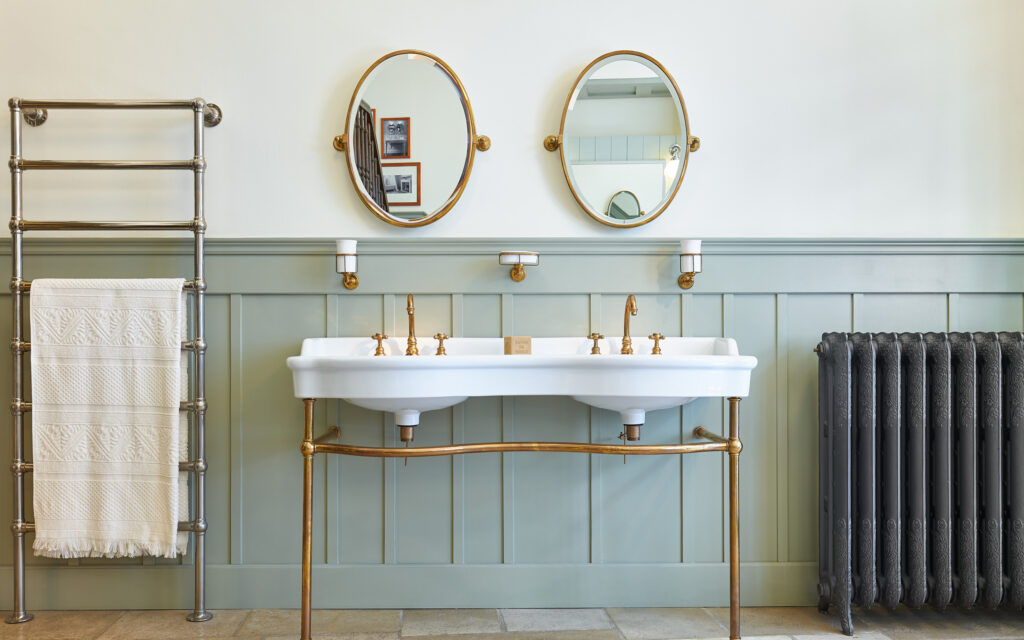
When bathrooms first found their way into private homes at the end of the 19th century, they were reserved for wealthy households. The fittings and ceramics reflected this status. Large pedestal sinks with generous proportions. Freestanding bathtubs on decorative feet. Elaborate metal work. Heavy, high-quality materials.
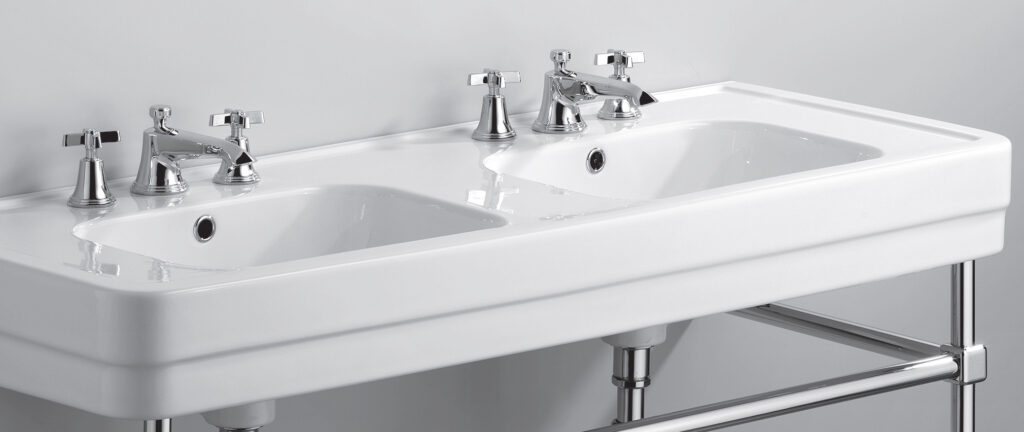
The sinks of this time were large because people washed standing at the sink. The morning toilet meant filling the basin, and that required space. Our Palazzo series is manufactured according to these original shapes. The curved shapes date from around 1900 to 1920, and the pools are deliberately generously sized according to today’s standards.
The color palette remained reserved: white ceramic, dark wood and metal surfaces in polished brass or nickel. Floors were typically tiled in black and white, often in a checkerboard or geometric pattern. The overall impression was one of consistency. These spaces were built to last for generations.
Art Deco (1920s to 1930s)
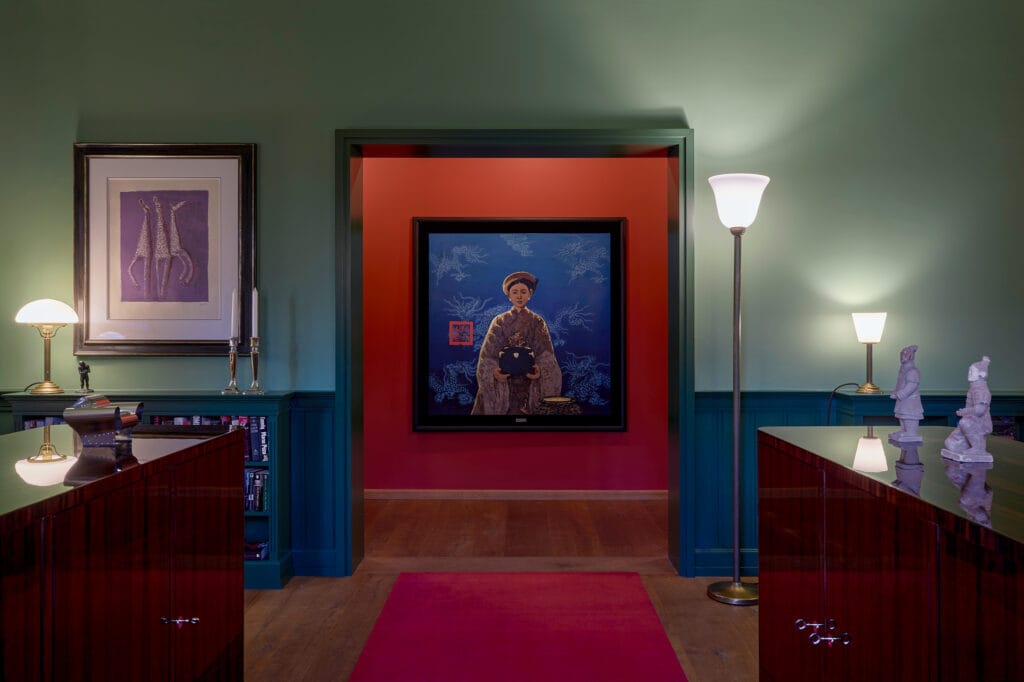
The change was striking. Where Victorian bathrooms were curved and ornamental, Art Deco reduced the forms to geometry. Clear lines, angular shapes, symmetrical compositions. The aesthetics drew on modern architecture, cubism and the machine age.
Bathroom fixtures and ceramics from this period have an edge. Clear, rectangular sinks, flat surfaces, stepped profiles. Chrome became the dominant metal surface, replacing the warmer tones of brass and nickel of the earlier era. Black and white remained popular, but Art Deco also brought bolder combinations: jade green, dusty pink, dark navy blue.
Our Square series comes straight from this era. The shapes are classic Art Deco, inspired by designs from around 1930, and the ceramics are made in Italy. In combination with chrome fittings and geometric floor tiles, a bathroom is created that clearly belongs to this era.
Mid-Century Modern (1940s to 1960s)
After the war, bathroom design became more democratic. Fittings and ceramics became smaller, more efficient and more colorful. Pastel ceramics in pink, mint green and light blue appeared. Wall-mounted faucets became common as design moved toward clear, uncluttered spaces.
The mid-century bathroom is currently experiencing a real revival. Design media has named it one of the strongest trends for 2026 and we see that in the visits to our showroom. People are drawn to the warmth and optimism of this era.
Our products are at the edge of this era. Our focus has always been on the earlier decades, when craft traditions were more pronounced. However, some of our taps work well in mid-century environments. The Rockwell series, with its urban, unfussy forms, is a particularly good fit, and its ceramic handles in ten colors match the color optimism of the era.
The elements that make up a vintage bathroom
Choosing the right era is the starting point. Then it comes down to four categories of decisions: ceramics, fittings, surfaces and accessories.
Ceramics: basins, WCs and baths
The big pieces set the tone. A pedestal sink with generous proportions signals a different era than a compact wall unit.
Historical wash basins were large because daily washing took place at the sink. We have retained these proportions in our Palazzo line, which reproduces original shapes from the early 20th century. We made a conscious design decision for our Jackson and Regent series: smaller basins that create more storage space while maintaining comfortable dimensions for washing hands and faces. The reason is simple. Modern bathrooms have showers. You no longer need a pool big enough for swimming.
Basins
All products →


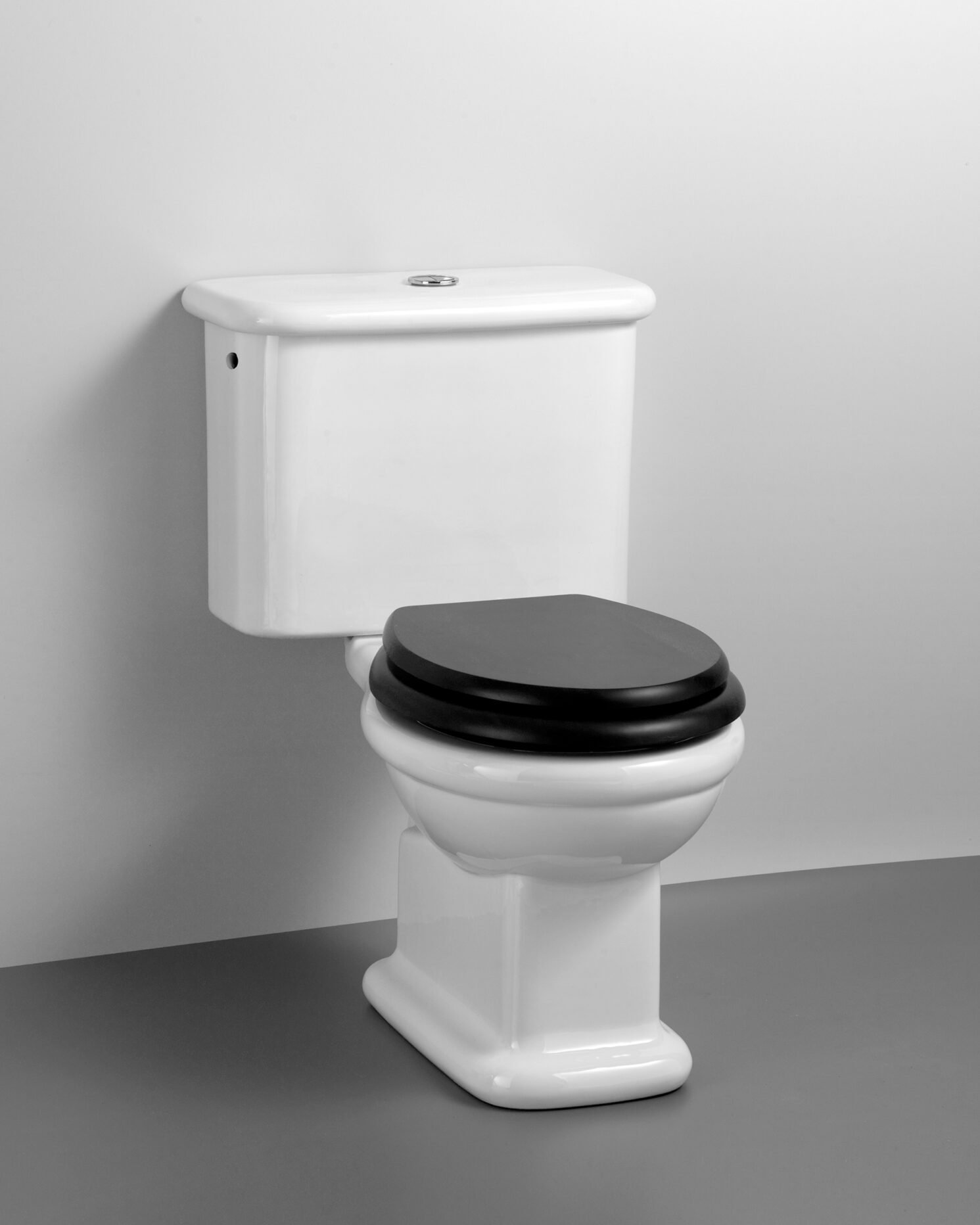
Toilets follow a similar logic. Our Palazzo and Square toilets use a traditional design that works better with a larger flush capacity. We recommend Geberit concealed cisterns, which your plumber can integrate behind the wall. From the outside you can see a stylishly designed toilet. Modern Swiss technology works behind the wall. The push plates come from our own design, tailored to the aesthetics.
Lavatories
All products →

When it comes to bathtubs, the free-standing tub remains the defining element of a vintage bathroom. Our Hanley bathtub is a copy of a ceramic bathtub from the Grand Hôtel Aix-les-Bains from around 1920. It is made in England from Vitrite, a composite of stone, minerals and resin that weighs 120kg. This weight gives it a quality that acrylic cannot achieve.
Baths
All products →


Fittings: taps, valves and shower systems
The fittings determine whether a vintage bathroom succeeds or fails. You can have the right sink and tub, but if the fittings look modern, the whole room falls apart.
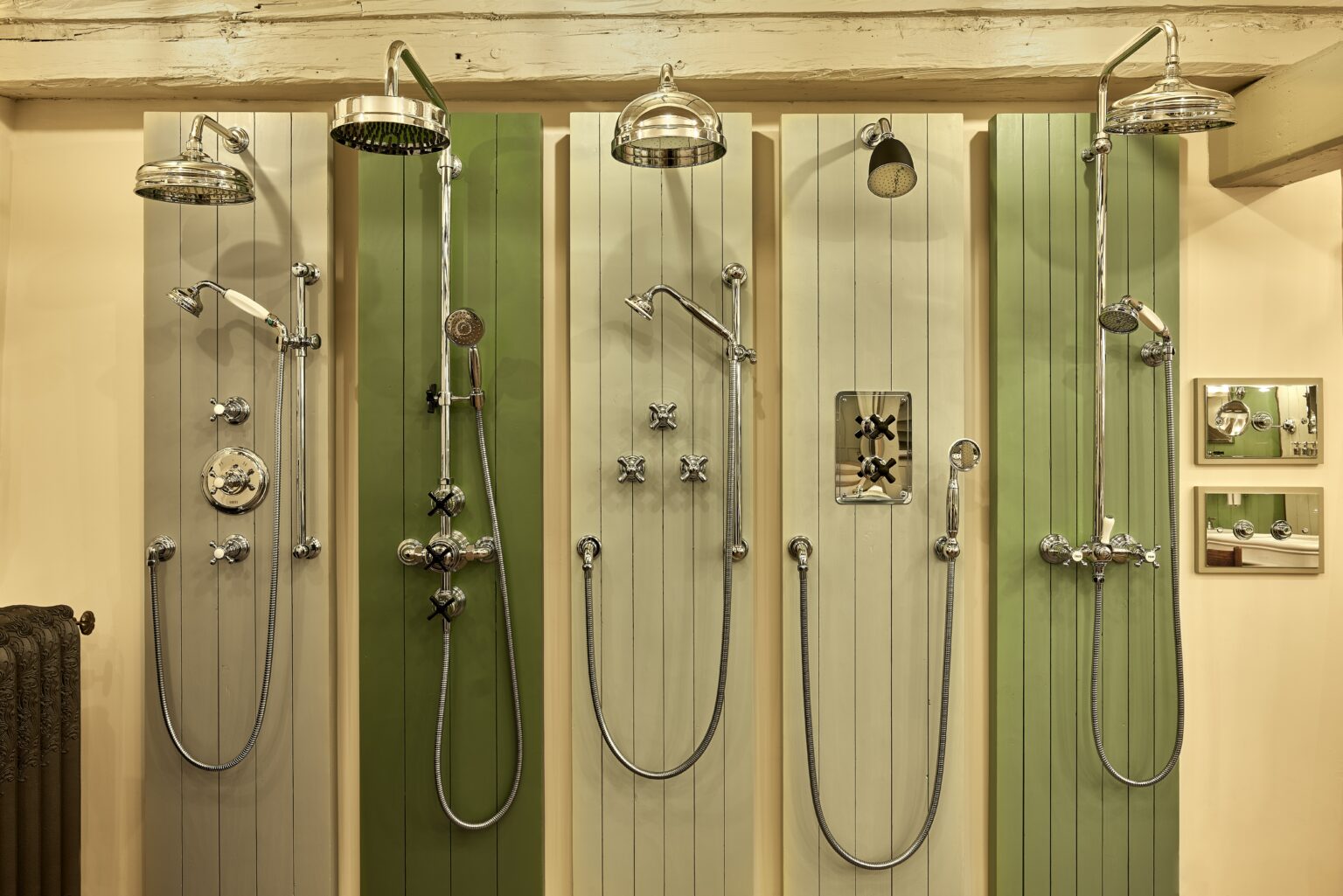
Cross-handle fittings are the hallmark of a historic bathroom. The design dates back to the 19th century and has changed little because the shape works. Our Rockwell series goes one step further: ceramic handles, available in ten colors. The ceramic is a functional detail: it stays cool to the touch and offers better grip than bare metal.
The choice of surface is just as important as the shape. We offer four options for all fitting series: chrome, polished nickel, matt nickel and polished brass. Each shifts the mood of the room. Chrome looks clear and Art Deco. Polished brass feels warmer, more Victorian. Matt nickel lies in between, with a softer character that works across eras.
Each fitting is made in workshops in England and France. The Sinclair series, our newest, picks up a detail from the 1920s: the handles are reminiscent of aircraft propellers, a classic of that era. It is carefully made in France.
Taps
All products →


Surfaces: tiles, walls and floors
We make fittings and ceramics, not tiles. But we’ve spent enough time in bathrooms to have clear ideas.
For Victorian and Belle Époque settings, the classic choice is a cement tile or geometric floor in black and white, sometimes with a colored border. Walls work well with large format white or cream tiles or simply with a painted plaster surface in a historic color. Metro tiles (the rectangular subway format) emerged in the early 20th century and continue to be effective in historical settings.
Art Deco bathrooms call for bolder geometry. Hexagonal floor tiles, fan patterns or strong two-tone combinations. Wall tiles can be larger and more monochrome, allowing the ceramics and fittings to provide the decorative accent.
Something to avoid: Mixing tile styles from different eras in the same room. A Victorian sink on an Art Deco floor creates a visual tension that is detrimental to both.
Accessories: the finishing layer
Accessories are easily overlooked but difficult to choose correctly. Towel holders, soap dishes, mirrors, mesh baskets. These pieces hold a room together.
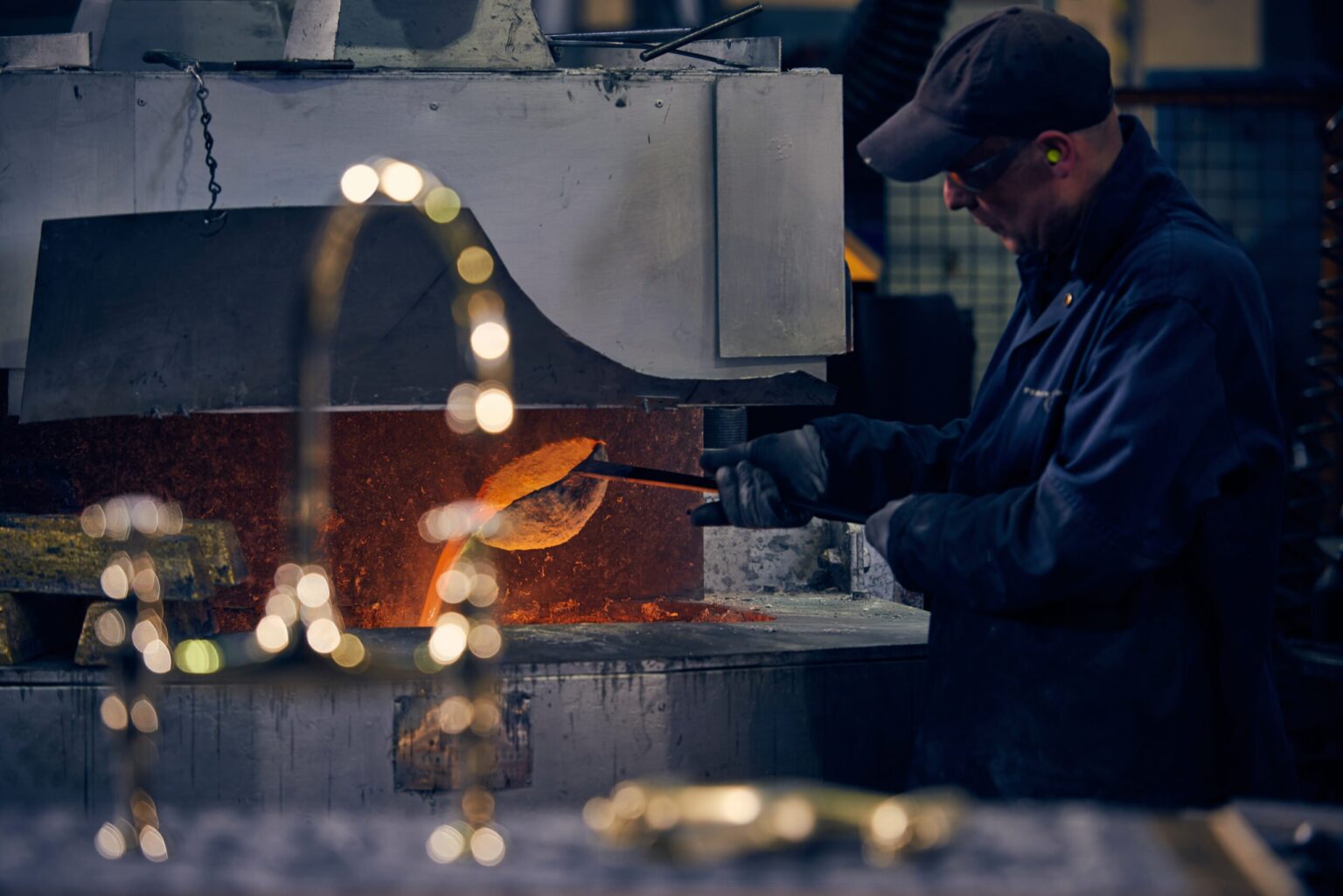
Our Ritz accessories are handcrafted in a small metal factory in Birmingham, the center of English metalworking. The production process is entirely traditional: brass is cast or latheed, then hand polished before the surface is finished in chrome, polished nickel or polished brass.
The tilting, facet-cut mirrors are a period-accurate detail that most people overlook. A frameless modern mirror in a vintage bathroom immediately reveals that the room was put together without full attention to the period.
Accessories
All products →


Bringing It All Together: Practical Considerations for Switzerland
A vintage bathroom in Switzerland has specific requirements that generic design guides never mention.
Swiss building standards and installation regulations apply regardless of the chosen aesthetic. Each product must comply with current regulations and installation should be carried out by a qualified plumber. This is standard practice for our products. Ceramics, fittings and accessories meet all European standards and are designed for professional installation.
Geberit is the standard system for concealed cisterns in Switzerland, and we have designed our toilets to work with the Sigma 12 cm module. Your installer knows the system. The only special feature: Our traditionally built toilets flush better with the single-flush version than with the dual-flush version because the higher water volume suits the design of the toilet.
The budget varies significantly depending on the scope. A vintage-style guest bathroom with a small washbasin, toilet and selected accessories is a different project than a complete master bathroom with a freestanding tub, double washbasin and full fittings. We would be happy to discuss this in our showroom at Strehlgasse 22 in Zurich, where you can see and hold everything in your hands before you decide.
If you work with an architect or interior designer, they are also welcome. Many of our projects begin with a specialist planner coming to us to explore the options before presenting them to their client.
One Final Thought
A vintage bathroom is a long-term decision. Interior design trends come and go. A well-made bathroom with period-appropriate fittings, high-quality materials and well-thought-out details will still look right even in twenty years. We know this because we see our previous installations from the late 1990s and early 2000s, and they have aged well. The brass has developed character. The ceramics look like the day they were installed.
This kind of longevity is what originally brought us to this work. As suppliers began to cease operations or move production out of Europe, we began designing and manufacturing our own fittings and ceramics to keep these traditions alive. Today, every piece we sell is made in England, France or Italy, under fair conditions, according to standards that we set ourselves.
If you’re considering a vintage bathroom, we’re here to help. Visit us or start exploring the rest of the articles in this series, where we delve deeper into individual eras, product categories and the craft behind our work.